
The War of White Space: Minimalist Cool vs. Intentional Warmth
When you think about white space, it’s tempting to see it as just empty areas in a room. but it’s more than that. It’s a clash between two styles—minimalist cool, which favors simplicity and silence, and intentional warmth, inviting comfort and human connection. You might wonder how to balance these pulls — to create a space that feels calm but not cold, open but also cozy. The real challenge is finding what works for you—without losing sight of the feelings you want to evoke.
The Essentials
- Minimalist cool emphasizes clean lines, open spaces, and subtle contrasts, promoting calmness and focus.
- Intentional warmth uses cozy textures, inviting colors, and personal touches to create comfort and social spaces.
- Balancing the two styles involves integrating cozy elements into sleek designs for a personalized, inviting environment.
- Deep white space in minimalist cool enhances clarity but may risk feeling distant; warmth counters this with the feeling of intimacy.
- Combining both approaches can optimize aesthetics and functionality, fostering areas that are both tranquil and nurturing.
Defining the Core Aesthetics: Minimalist Cool and Intentional Warmth
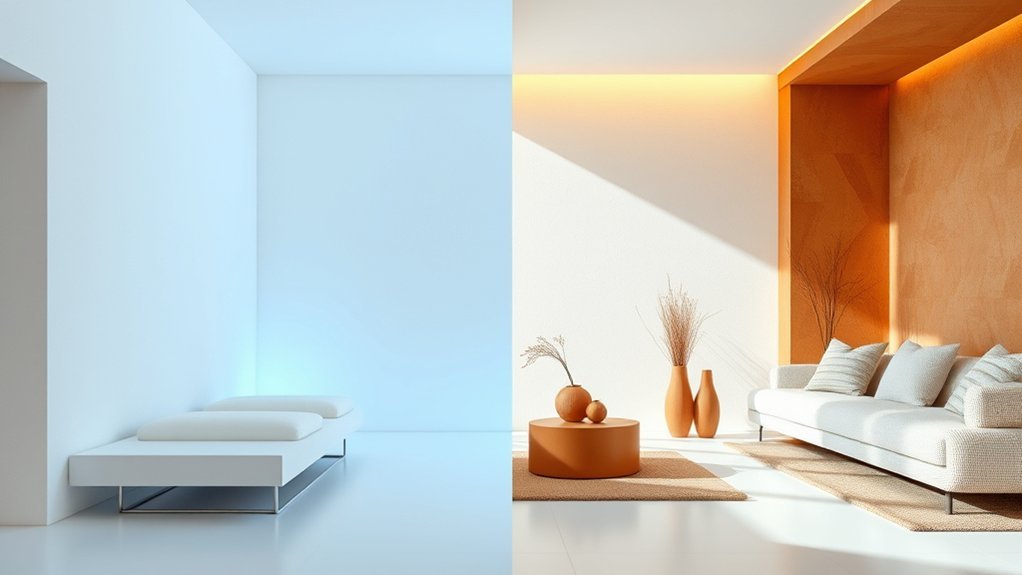
When you start thinking about interior styles, you realize how much they reveal about your personality—whether you prefer something cool and understated or warm and inviting.
Minimalist cool leans on clean lines, simple shapes, and a sense of order. Its design principles focus on less is more, using open spaces and uncluttered surfaces. Aesthetic contrasts are subtle but impactful—think sleek black and white, or stark contrasts between light and dark.
Intentional warmth, on the other hand, involves cozy textures, layered elements, and inviting colors. Its principles embrace comfort and intentional detail, creating a space that feels personal and lived-in.
You might ask yourself—do I crave calm, or do I want somewhere that feels like a hug?
Material and Palette Choices: Crafting the Mood
Choosing the right materials and colors can really set the mood in your space. It’s about understanding color theory and how different textures contrast.
- Soft, matte fabrics like linen or wool can create warmth, while sleek, glossy surfaces add a cool vibe.
- Warm woods such as oak or cherry signal cozy, intentional spaces.
- Cool tones like muted blues or earthy grays keep things understated, yet inviting.
- Add texture contrasts—rough stone against smooth glass, fluffy rugs with sleek furniture—to keep the eye engaged.
- Think about how light interacts with your materials—do you want a reflective surface or a matte finish?
Are you leaning toward calming or energizing? Picking materials and colors isn’t just about looks—it’s about crafting a feeling that sticks with you.
Psychological and Functional Impacts of Design Styles
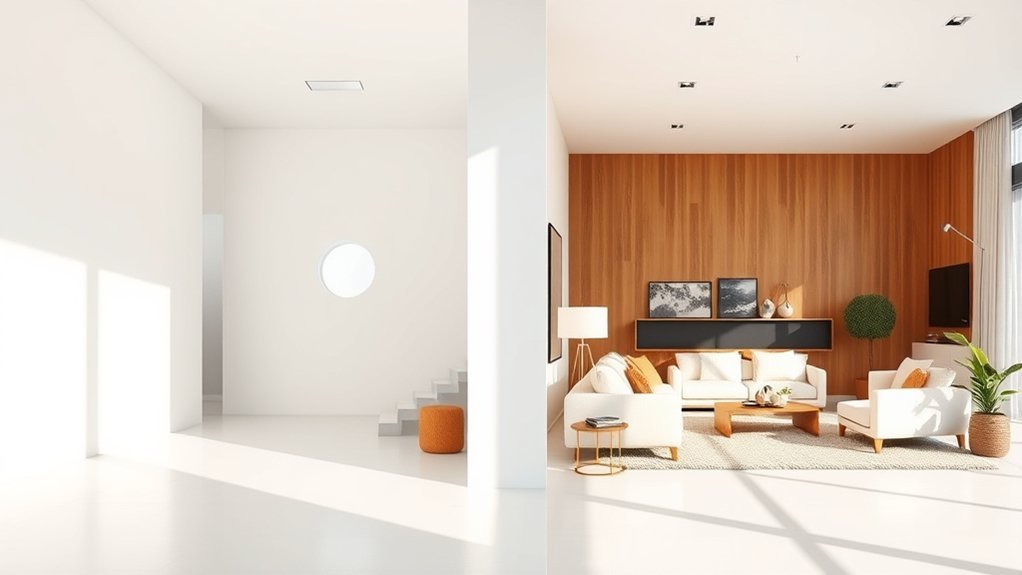
Design styles don’t just change how a space looks; they shape how you feel when you’re in it. A minimalist cool environment might make you feel calm or distant, which can boost focus but also create a sense of coldness or detachment. On the other hand, intentional warmth often fosters comfort and connection, encouraging you to linger and relax. The psychological effects are real—your mood shifts based on the space around you. Functional benefits also matter. Clear, uncluttered spaces can improve productivity, while cozy, warm settings support relaxation. Have you noticed how your mood changes when you walk into a room? The design style influences that. It’s more than aesthetics; it’s about how your environment affects your thoughts, feelings, and actions.
Blending the Styles: Finding Personal Harmony in White Space
Blending minimalist cool with intentional warmth can feel a little tricky at first. It’s about balancing those clean lines and open spaces with cozy touches that make your space feel lived-in and personal. You want your style fusion to reflect you, not just follow design rules.
Think about adding:
- Warm-toned throw pillows against sleek furniture
- Soft textures like woven rugs or plush blankets
- Plants that bring life and warmth
- Art that injects personality without cluttering
- Subtle lighting to create inviting ambiance
These little touches help you express your personal style while respecting minimalism. It’s not about perfect harmony but what feels right to you. How do you want your space to speak about who you are?
Frequently Asked Questions
How Do Cultural Influences Shape Minimalist Cool and Warm Design Styles?
You see, cultural context guides your design evolution, influencing whether you lean towards minimalist cool or intentional warmth. Cultural influences shape your choices, reflecting values, traditions, and aesthetics that define your style’s emotional tone and visual identity.
What Are Common Misconceptions About the Aggressiveness of Minimalist Cool?
You might think minimalist cool is aggressive, but it’s a misunderstood aesthetic that evokes calm and clarity. It’s not about harshness but about intentional space, shaping emotional responses through simplicity, not through loud or aggressive design elements.
Can These Styles Be Adapted for Small or Unconventional Spaces?
You can adapt minimalist cool and warm styles for small or unconventional spaces by emphasizing space enhancement and choosing a cohesive color palette. Use multifunctional furniture and thoughtful layout to keep the area open, stylish, and functional.
How Do Lighting Choices Influence the Perception of Warmth or Coolness?
Lighting temperature considerably influences your emotional response, making spaces feel warmer or cooler. Cooler lighting enhances a minimalist aesthetic, while warmer tones create a cozy atmosphere, guiding your perception and mood in any space you choose to light.
What Are Cost Considerations When Adopting Either Aesthetic Intentionally?
When adopting either aesthetic, consider your budget constraints and material selection; warm tones often cost more with richer materials, while cool minimalist designs may require less investment in cheaper, sleek materials, helping you manage costs effectively.
Final Thoughts
So, if you want a space that feels right for you, maybe mix a little warm with cool. Don’t feel like you have to pick one style perfectly. Use warm textures in a minimalist room or add simple clean lines to an cozy space. The key is listening to what makes you feel comfortable. Are you more about calm or connection? Finding your balance might just make your space truly yours.