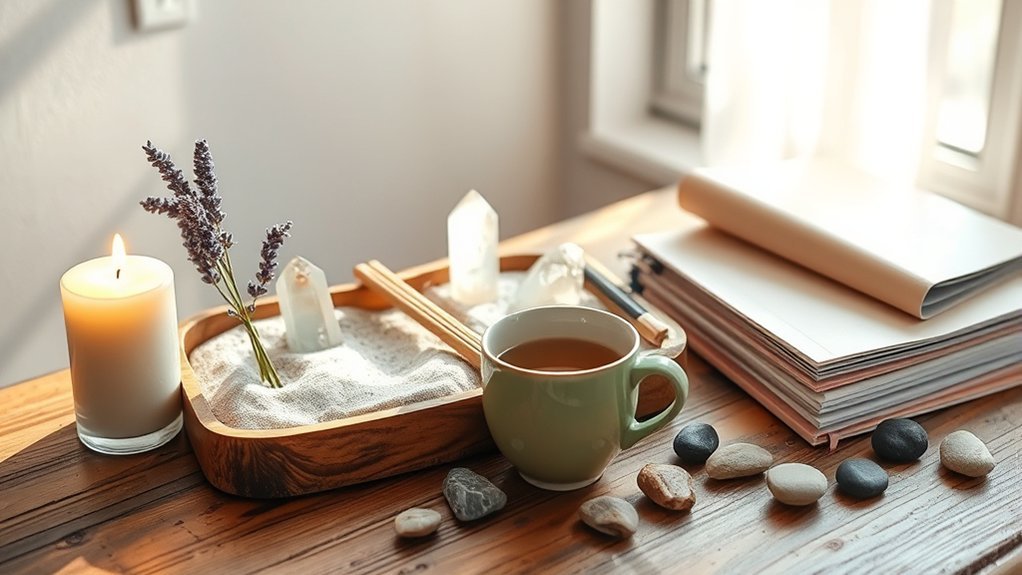
The Anti-Stress Home Toolkit
Building your own anti-stress home toolkit might seem simple, but it really isn’t. Small changes like choosing calming paint colors or adding a cozy spot can create a noticeable difference. Sometimes, just lighting a scented candle or playing soft music helps you unwind after a tough day. Have you reflected on what calming tricks work best for you? There’s more to contemplate—things that might surprise you—so let’s explore how a few mindful tweaks could transform your space.
The Essentials
- Create a calming environment using soothing colors and natural lighting to promote relaxation.
- Use essential oils like chamomile, vanilla, and citrus to enhance mood and scent your home intentionally.
- Incorporate mindfulness and breathing exercises into daily routines to reduce stress levels.
- Curate playlists with calming or uplifting music to quickly access emotional comfort.
- Design a dedicated stress-relief corner with cozy decor, plants, and personal touches for a retreat space.
Creating a Calming Environment at Home
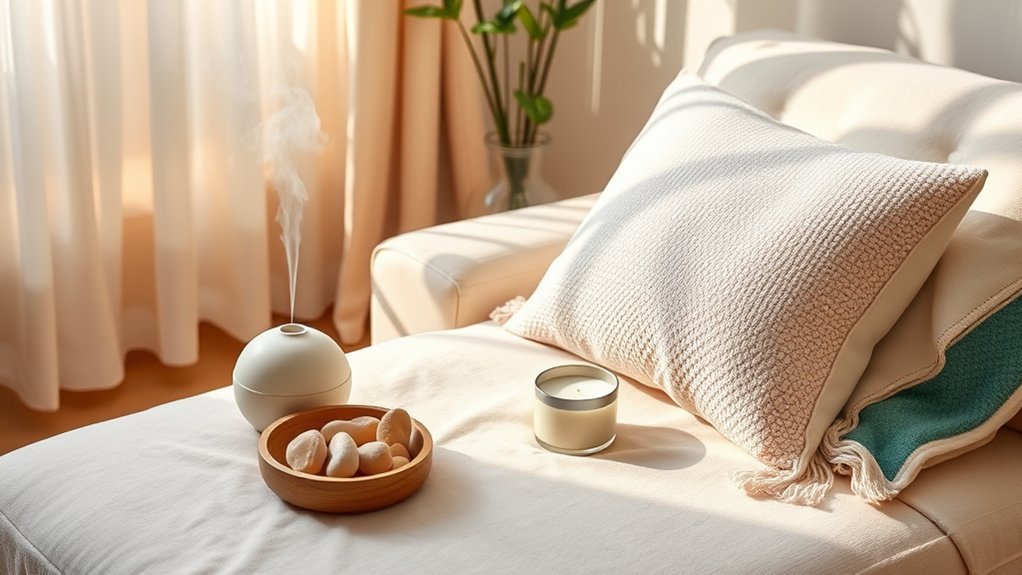
Sometimes, all it takes to feel more relaxed at home is making a few simple changes. Start with your color palettes—soothing, muted tones like soft blues, gentle greens, or warm beiges help create a calming vibe. Bright, harsh colors can make a space feel tense, so go for something that feels cozy and inviting. Natural lighting plays a huge role too. Open your curtains and let sunlight flood in during the day. It not only brightens your space but also lifts your mood. If natural light’s limited, consider adding warm lamps, but avoid overly bright or blue-toned bulbs. Do you notice how the right lighting and colors make your space feel more peaceful? Small tweaks like these can really change the way you relax at home, right?
Essential Aromatherapy and Scent Strategies
If you want your space to feel calmer and more inviting, adding the right scents can make a difference. Using scent combinations strategically can boost your mood and create a relaxing atmosphere. Think about pairing lavender with citrus for a fresh, soothing vibe, or mixing eucalyptus with peppermint to clear your mind. Small changes in scent can have a big impact.
- Combine calming essential oils like chamomile and vanilla for a cozy feel
- Use citrus scents like orange or lemon to energize and uplift
- Create a balancing blend with sage and ylang-ylang for mood enhancement
Are you aware of how different scents influence your feelings? Tinkering with your scent choices might just turn your home into your personal retreat.
Simple Mindfulness and Breathing Exercises
After playing around with scents, sometimes you realize that just stopping for a moment and focusing on your breath can make a big difference. It’s simple but effective—like a reset button for your mind. You can try mindful meditation, just sitting quietly and paying attention to what you feel, hear, or smell. Breathing techniques help too, like taking slow, deep breaths in through your nose and out through your mouth. It’s not about emptying your mind but noticing your breath without judgment. What if, instead of rushing through your day, you paused and took a few moments for yourself? These tiny practices can really help reduce stress and ground you. You don’t need special tools—just your breath and a little patience.
Curating Your Favorite Relaxation Playlists
Have you ever noticed how a playlist can change your mood faster than you expect? It’s like your own musical escape hatch. When you curate your relaxation playlists, think about your favorite artists or relaxing music genres—like acoustic, classical, or chillhop—that genuinely soothe you.
Here are some ideas to get started:
- Choose songs that evoke calm or happy memories
- Mix in instrumental tracks for less distraction
- Create different playlists for different moods or times of day
Do you find yourself returning to certain artists or genres when you need a break? That familiarity can be comforting. Building a playlist takes a little effort, but it’s worth it when you need a quick stress relief. What songs instantly make you feel more relaxed?
Designing a Personal Stress-Relief Corner
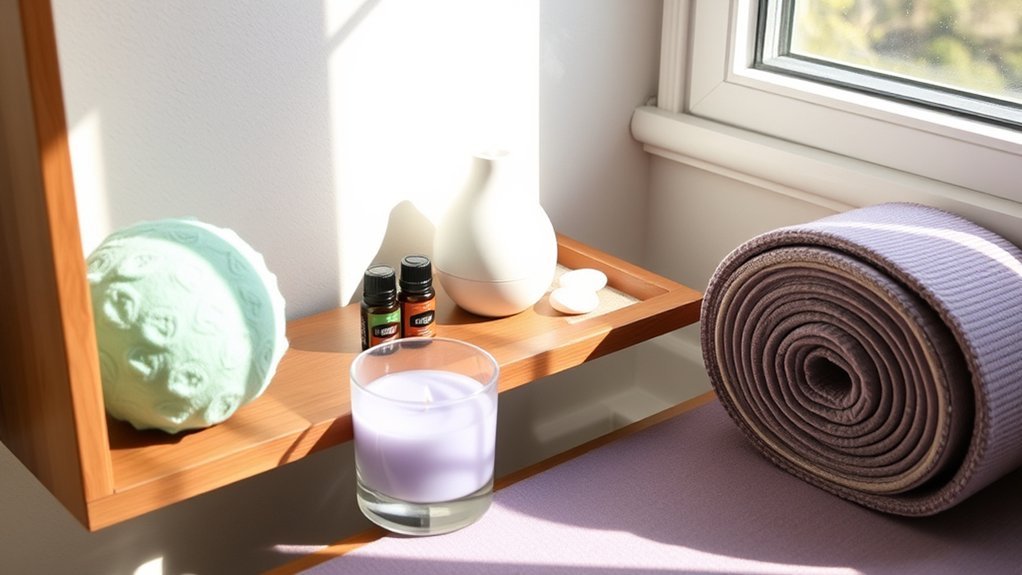
Creating a personal stress-relief corner means carving out a space just for you—somewhere you can step away when things feel overwhelming. Start with color choices. Soft, calming shades like blues or gentle greens can make the space feel serene. Or maybe, warm earthy tones help you feel grounded. Don’t forget decor elements—add a cozy chair, cushions, or a small table for your tea or journal. Items like fairy lights, plants, or calming pictures bring a personal touch. Think about what makes you feel relaxed—do you want soft textures or natural light? The key is to make it yours. Would a small fountain or aroma diffuser help you unwind more easily? Keep it simple, but intentional. After all, this space should invite you to breathe and reset.
Frequently Asked Questions
How Often Should I Update My Stress-Relief Tools?
You should regularly review your stress-relief tools, aiming for monthly or quarterly updates to guarantee your toolkit remains effective. Maintaining your toolkit keeps it fresh and tailored to your evolving needs, enhancing your stress management strategies.
Can Children Benefit From This Home Toolkit?
You can help children benefit from your home toolkit by including child-friendly activities that promote emotional expression, making stress relief engaging and accessible for kids, helping them develop healthy coping skills in a supportive environment.
What Budget Options Are Available for Affordable Stress Relief?
You can explore budget-friendly essentials like calming teas, scented candles, and relaxation apps, and try DIY stress relief techniques such as deep breathing, meditation, or stretching, making stress management affordable and accessible for you.
How Do I Personalize My Toolkit for Unique Stress Triggers?
You identify your stress triggers and consider your personal preferences to customize your approach. Choose techniques and items that resonate with you, ensuring your stress relief methods feel effective and natural—making relaxation effortless and tailored to your needs.
Are There Recommended Activities for Long-Term Stress Management?
You should incorporate mindfulness practices and relaxation techniques into your routine for long-term stress management. Regularly practicing meditation, deep breathing, or yoga helps reduce stress, improve resilience, and create a more balanced, calm mindset over time.
Final Thoughts
Building your calming space isn’t about perfect design. It’s about what helps you breathe a little easier, feel grounded. Maybe it’s lighting just right or a favorite playlist. Sometimes, a quick breathing exercise or a cozy corner makes all the difference. Like, what small change could you make today that might help you unwind? It’s not about fixing everything. Just find what works for you, and let it be a little sanctuary whenever you need it.