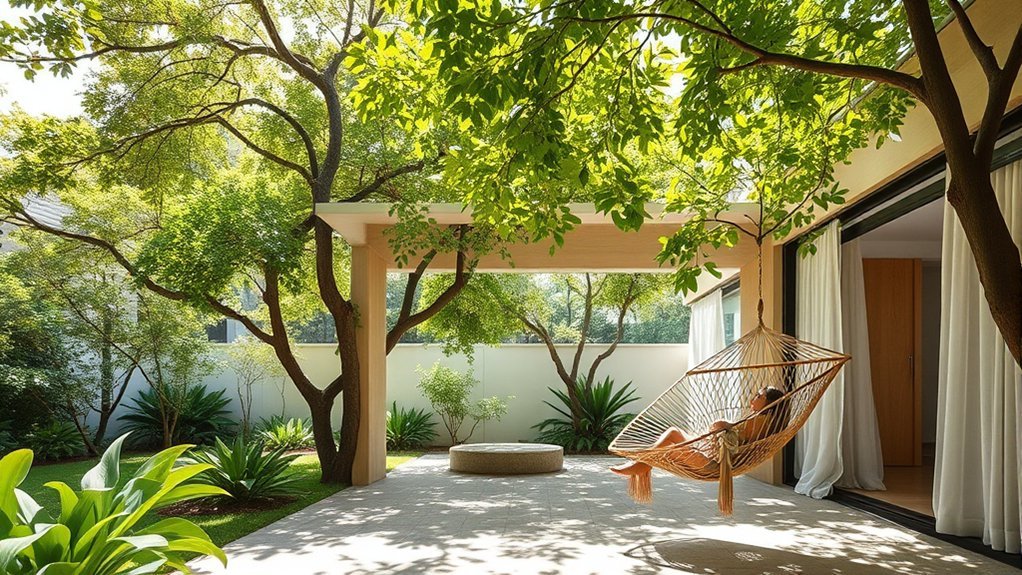
Natural Cooling: Designing for Comfort Without Central Air
Have you ever wondered if you could keep your home cool without blasting the AC all day? It’s about understanding how each element—like where your windows face or the materials you choose—can help you stay comfortable naturally. Small tweaks, like adding shade or designing for cross-breezes, can make a difference. But it’s not just about avoiding energy bills. Sometimes, the best solutions are the simplest, if you know where to start…
The Essentials
- Orient buildings to minimize sun exposure and utilize shade devices like overhangs or pergolas.
- Maximize cross-ventilation by placing windows and vents on opposite sides aligned with prevailing winds.
- Incorporate natural insulation materials such as hemp, wool, or recycled denim to enhance thermal comfort.
- Use vegetation like green roofs, potted plants, and trellises to provide shade and promote cooling microclimates.
- Leverage thermal mass and nighttime ventilation to absorb heat during the day and cool spaces naturally at night.
Optimizing Building Orientation and Site Layout
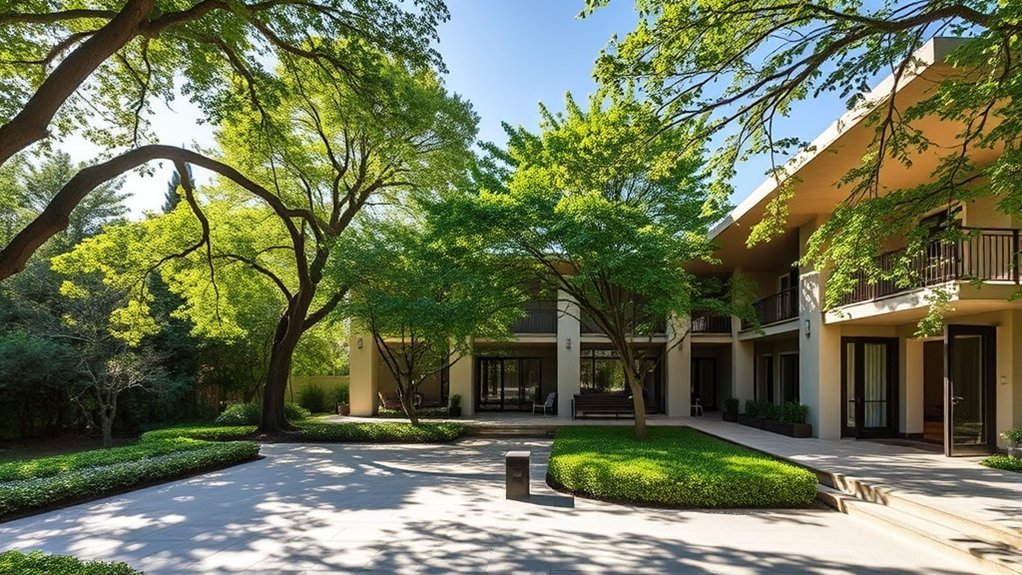
When you’re trying to reduce how much cooling your building needs, starting with its orientation and layout makes a big difference. Think about solar access—positioning your building to minimize direct sun during the hottest parts of the day can keep things cooler naturally. Maybe face it away from the afternoon sun or add shading elements. Wind patterns matter too; if you can orient your structure to catch prevailing breezes, it helps with natural ventilation and keeps indoor temperatures in check. Sometimes, it’s about balancing these factors—placing windows where breeze flows or shading windows from harsh sun. Have you considered how your lot’s natural features could influence cooling? Small tweaks in layout might not seem like much, but over time, they can cut down your reliance on energy-draining cooling systems.
Incorporating Passive Ventilation and Cross-Breezes
Getting fresh air into your building can make a real difference, especially if you’re trying to cut down on cooling costs. Passive ventilation relies on airflow movements, which means understanding how air moves through your space. Proper window placement is key. If you position windows on opposite sides, you create cross-breezes that can flow naturally, pulling cooler air in and pushing warm air out. Think about the prevailing wind direction in your area — arrange your openings to catch that breeze. Sometimes, slightly opening top and bottom windows helps control airflow, too. Have you noticed how some rooms feel cooler when the breeze moves just right? It’s all about harnessing natural forces and experimenting with different window setups. Adjustable vents might help, but sometimes simple window tweaks do the trick.
Using Natural Materials to Enhance Insulation and Cooling
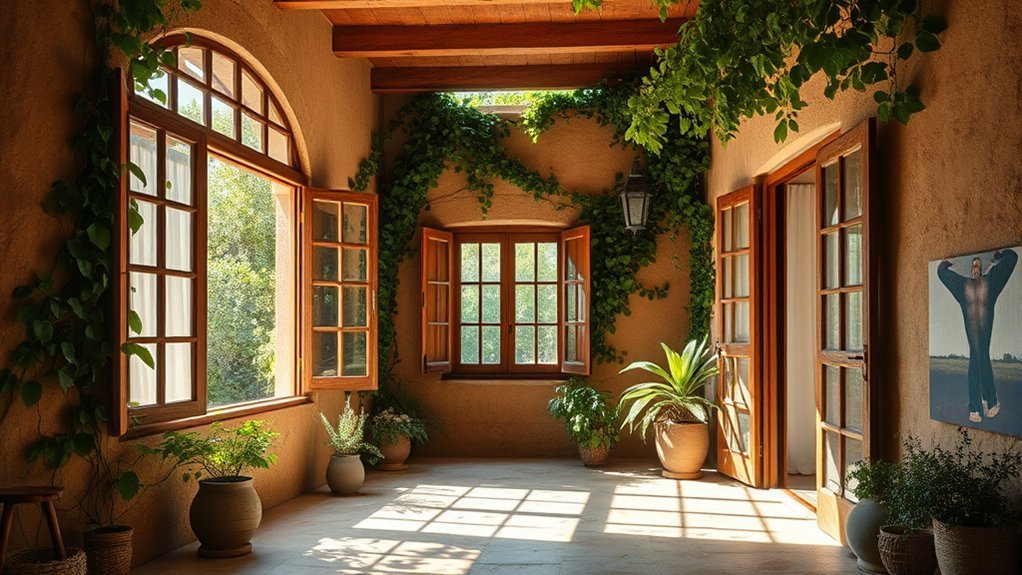
Using natural materials for insulation and cooling is an easy way to make your place more comfortable without relying too much on energy-heavy solutions. Choosing sustainable materials like cork, hemp, or sheep’s wool can boost thermal performance naturally. These options help keep the heat out in summer and trap warmth inside during winter. Plus, they’re healthier for you and better for the environment. You might wonder, do these materials really work as well as synthetic ones? The answer depends on how you install them and how well your space is designed. Sometimes, it’s about small tweaks that add up—like adding a layer of insulation made from recycled denim or using clay plaster walls. Think about what natural materials might fit into your home’s needs and style.
Integrating Shading Devices and Vegetation
Three main ways to help keep your space cooler involve shading devices and green haven outside your windows. Using shading techniques like awnings, pergolas, or simple overhangs can block direct sunlight during the hottest parts of the day. These are easy to install and cost-effective. Green roofs add another layer of natural cooling, absorbing heat and reducing the temperature inside your building. They also provide a bit of a visual barrier from the sun, and yes, they require some maintenance but can be worth it. Have you thought about combining shade and greenery? A shaded balcony with potted plants or planting a vine on a trellis can make a real difference. It’s about creating those microclimates that keep things comfortable without extra energy.
Designing for Nighttime Cooling and Thermal Mass
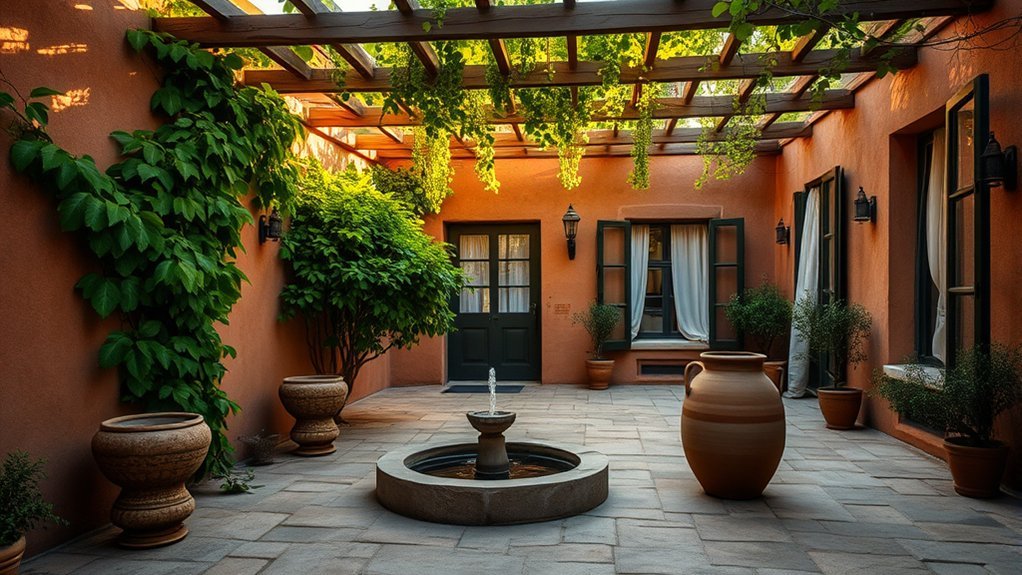
When the sun goes down, your building should still be working for you, not just soaking up heat all night. Nighttime strategies are key here. Use thermal mass—like concrete or brick—to absorb heat during the day. When temperatures drop, this thermal inertia slowly releases warmth, keeping your space cooler inside during the next day.
- Incorporate thick, dense materials that can store and slowly release heat.
- Open windows at night to let cool air refresh the space, then close them in the morning.
- Think about using window vents or fans to enhance airflow for ideal thermal inertia.
Are you leveraging thermal mass effectively? Can your design adapt to changing weather? These small choices could make a big difference in designing for natural cooling.
Frequently Asked Questions
How Do Natural Cooling Strategies Impact Indoor Air Quality?
Natural cooling strategies improve indoor air quality by enhancing airflow patterns, which exchange stale air for fresh, and support humidity control, preventing mold and allergens. You’ll enjoy healthier, more comfortable spaces without relying on mechanical systems.
Can These Methods Be Used Effectively in Urban Environments?
You can use natural cooling methods effectively in urban areas by incorporating urban greenery and designing to reduce heat islands. These strategies lower temperatures and improve comfort, making them practical even within city environments without relying on central air.
What Are the Cost Implications of Passive Cooling Design?
You should conduct a cost analysis to understand the expenses involved in passive cooling design. Using sustainable, effective design materials upfront might increase initial costs but saves money long-term through reduced energy bills and maintenance.
How Do Climate Changes Affect Passive Cooling Effectiveness?
Climate variability and heat waves can reduce passive cooling effectiveness by increasing outdoor temperatures, challenging your strategy to cool buildings naturally. You’ll need to adapt your designs to maintain comfort amid these changing, unpredictable weather patterns.
Are There Specific Plant Species Best Suited for Shading and Cooling?
You should choose shade trees like oaks or maples and incorporate cooling vines such as Virginia creeper or wisteria, as they provide effective shading and help decrease indoor temperatures naturally, improving passive cooling without relying on central air.
Final Thoughts
So, really think about your home’s orientation and how you can use natural airflow. Maybe add shading with trees or awnings—simple but effective. Using natural materials can help keep things cool, too. Sometimes, just opening windows at the right times or designing for thermal mass can make a big difference. It’s not about perfect solutions, but finding what works best for you. Are there small tweaks you could try today?