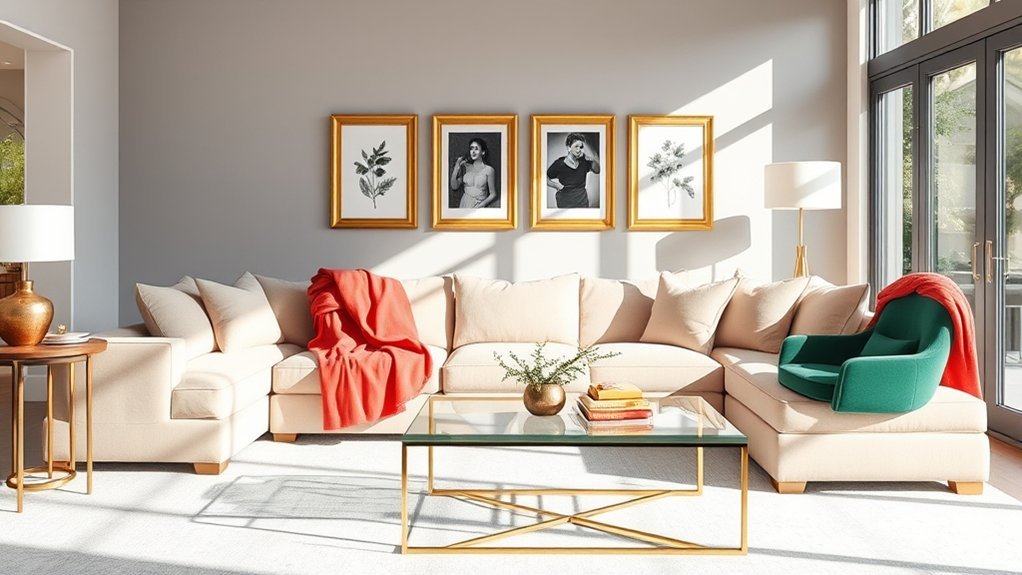
Choose the Best Accent Color for Your Home & Living Room Decor
Choosing an accent color for your home isn’t just about picking something that looks nice. It’s about understanding the mood you want to create and how that color interacts with your main palette. For example, a soft blue might bring calm, while a lively orange adds energy. But how much is too much? Finding a balance can make your space feel inviting without overwhelming it. Let’s explore how to make that work effortlessly.
The Essentials
- Select accent colors that complement your main palette for a harmonious look.
- Consider the mood you want to create—calm, energizing, or cozy—when choosing bold or subtle accents.
- Use color theory to pick contrasting or analogous shades that enhance your room’s aesthetic.
- Incorporate textures and layers to make accent colors stand out naturally without overwhelming spaces.
- Test small swatches to see how lighting affects the color and ensure it aligns with your desired atmosphere.
Understanding Your Color Palette and Room Mood
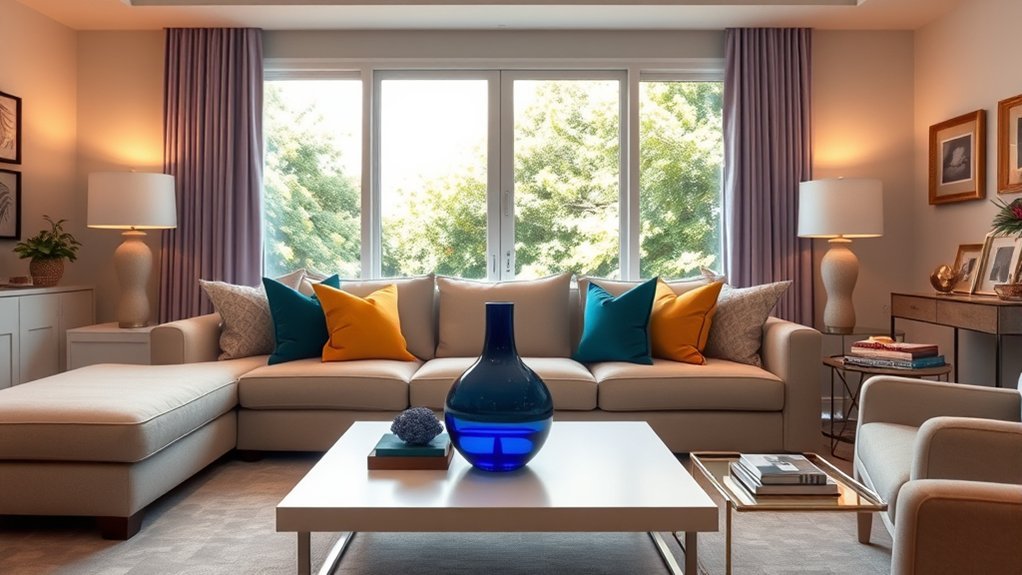
Understanding your color palette is more than just picking pretty shades. It’s about knowing how color psychology influences your mood and the room’s atmosphere. For example, if you want a calm, relaxing space, soft blues or greens can help. Bright reds or oranges? They might energize a room but can feel overwhelming if overused. Think about what you want to feel when you’re in the space—peaceful, motivated, cozy? Your choice of colors plays directly into that. Don’t forget, lighting matters, too. A warm-toned room can change how a color feels. Are you truly aware of how colors affect your daily vibe? Picking the right palette isn’t just aesthetics — it’s creating an environment where you want to spend time.
Selecting Complementary and Contrasting Accent Colors
Choosing the right accent colors can really change how a room feels. Using color theory, you can pick shades that complement each other or create contrast. For example, pairing a soft blue with warm orange adds vibrancy while keeping balance. Or, if you want a more subtle look, choose colors that are adjacent on the color wheel, like green and yellow. Think about emotional impact too—bright reds energize, while muted purples bring calm. Do you want your space to feel lively or relaxed? Contrasting colors draw focus, but sometimes, matching tones create harmony. It’s about experimenting and trusting your instincts. Sometimes, a simple shift in shade makes all the difference. What mood do you want your accent colors to evoke? It’s worth considering, truly.
Tips for Incorporating Accent Colors With Style
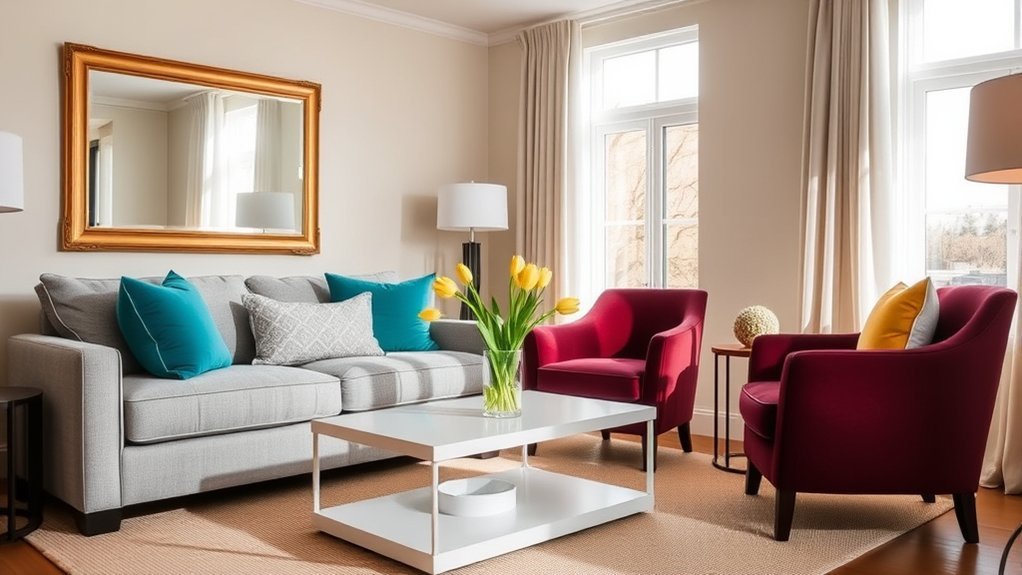
When it comes to mixing accent colors into your decor, the key is to do it intentionally but also with a bit of flexibility. Think about accent color psychology; choose shades that evoke the mood you want—calm, energy, or warmth. Layer textures like soft throws or textured pillows to add depth and make colors pop in a natural way. Use accent colors sparingly, perhaps on a single wall or with accessories, so you don’t overpower the room. And don’t forget, shifting textures can make even small pops of color feel more layered and intentional. Are you comfortable playing with bold versus subtle tones? Sometimes, it’s about experimenting, seeing what works best. Want your space to feel cohesive but visually interesting? It’s all about balance.
Frequently Asked Questions
How Do I Choose an Accent Color for Small Rooms?
When selecting an accent color for small rooms, consider color psychology and how lighter shades can enhance space. Opt for bold, lively hues to create contrast and make the area feel energetic without overwhelming the room’s size.
What Are Safe Color Combinations for Color-Blind Individuals?
You prioritize color accessibility and inclusive design by choosing high-contrast, clearly distinguishable color combinations, like blue and yellow. Avoid subtle hues, ensuring safe, visually effective choices for color-blind individuals and enhancing overall comfort.
Can Accent Colors Change the Room’S Perceived Size?
Accent colors influence your room’s perceived size through color psychology and spatial perception; lighter shades make spaces seem larger, while darker hues create coziness. Choose your accent colors strategically to enhance or diminish space as desired.
How Often Should I Update My Accent Colors?
You should update your accent colors seasonally or as your personal preference shifts. Regular changes keep your space fresh, reflect current trends, and suit your evolving style, making your home feel lively and personalized.
Are There Any Universal Accent Colors Suitable for All Decor Styles?
You may wonder if universal accent colors suit all decor styles. Neutral tones and timeless shades often work well across various designs, providing versatility and elegance that complement diverse color schemes without clashing or feeling out of place.
Final Thoughts
Choosing the right accent color is about balance and feeling comfortable in your space. Think about how you want to feel—energetic, calm, playful? Maybe a pop of lively orange or a subtle coral works best. Don’t be afraid to experiment—swap out pillows, artwork, or accessories until it clicks. At the end of the day, it’s your home, so trust your instincts. What color makes you smile when you walk in?